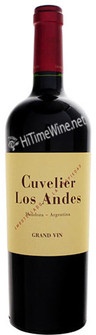
As one of the top estates of Bordeaux, Cheval Blanc connotes the heights of luxury in the world of fine wine. While that hasn't changed over the decades, the landscape of wine has! Thanks to pioneers who spread the vine to new lands like Argentina, we have new wines like the Cheval des Andes, literally named the "Cheval Blanc of the Andes." Savvy connoisseurs have been quick to recognize the world-class quality you find here for the price. In fact, the 2022 Cheval des Andes earned a 99-point review from Antonio Galloni's Vinous Media... at just under $100, it's a no-brainer for fans of bold luxury reds!
It was that potential for exploring new, bold styles that drew the head of Chateau Cheval Blanc, Pierre Lurton, to the foot of the Andes Mountains of Argentina. The thread of connection to Bordeaux was clear: the Malbec that had faded into the background in French vineyards had found a thriving existence along with the immigrants who had brought it. Working with the already-established Terrazes de los Andes winery, Pierre's team found harmony in the dueling characters of Cabernet Sauvignon's sleek, energetic flow and Malbec's generous core density, along with a dash of spicy-floral Petit Verdot from Cheval Blanc's own vine clippings.
The magic of the high-altitude vineyards shines through in the 2022 Cheval des Andes, imbuing its rich and concentrated core with a mouthwatering lift, all solidly framed by velvety, fruit-wrapped tannins that embrace the palate in the finish. Its perfumed display of spice (mixed peppercorns, licorice root), fresh herbs (mint, thyme), and purple flowers, accent a rich, polished core of red and dark fruit, fragrant earth, cinnamon, and cedar. Like any young wine of this caliber, give it an hour in a decanter, and pair with a beef roast or thick steaks. For those who like to age their wine, this will be even more impressive in 2 to 5 years!
VINOUS 99 POINTS - "The 2022 Cheval des Andes is a significant upgrade to Mendoza’s historic regional blends, combining grapes from Las Compuertas (Luján de Cuyo) and Paraje Altamira (Uco Valley). The 2022 vintage allowed for a slower ripening of Cabernet Sauvignon, which take prominence in this blend alongside 30% Malbec and 5% Petit Verdot. Aging was carried out in 40% 225-liter Bordeaux barrels, 35% 400-liter barrels and 25% 2,500-liter foudres, with 50% new oak. A bouquet of bright fruit—raspberry, blueberry and delicate cassis—and complementary bay leaf and mint tones give way to a touch of ash and mild bell pepper. Boasting serious concentration, fine tannins and a slight creaminess, the 2022 has a structure that is firm but never tight, maintaining weight without losing balance. The finish is long, energetic and full of flavor. This is an exceptionally beautiful wine." - Joaquin Hidalgo
65% Cabernet Sauvignon, 30% Malbec, & 5% Petit Verdot
There are some more changes: in 2020, they went for a lighter bottle, weighing 100 grams less than the one they used in 2018 and 2019 but close to 300 grams less than the bottle from before. It's also a slimmer bottle, always thinking about the environment. They are very focused on agroecology, accelerating the regenerative viticulture and using cover crops; they have planted 1,900 trees in the last three years, creating small clusters of biodiversity for birds. They have transplanted some centenary olive trees and keep their sheep and lamas on the property. Very green-minded."
It was that potential for exploring new, bold styles that drew the head of Chateau Cheval Blanc, Pierre Lurton, to the foot of the Andes Mountains of Argentina. The thread of connection to Bordeaux was clear: the Malbec that had faded into the background in French vineyards had found a thriving existence along with the immigrants who had brought it. Working with the already-established Terrazes de los Andes winery, Pierre's team found harmony in the dueling characters of Cabernet Sauvignon's sleek, energetic flow and Malbec's generous core density, along with a dash of spicy-floral Petit Verdot from Cheval Blanc's own vine clippings.
The magic of the high-altitude vineyards shines through in the 2022 Cheval des Andes, imbuing its rich and concentrated core with a mouthwatering lift, all solidly framed by velvety, fruit-wrapped tannins that embrace the palate in the finish. Its perfumed display of spice (mixed peppercorns, licorice root), fresh herbs (mint, thyme), and purple flowers, accent a rich, polished core of red and dark fruit, fragrant earth, cinnamon, and cedar. Like any young wine of this caliber, give it an hour in a decanter, and pair with a beef roast or thick steaks. For those who like to age their wine, this will be even more impressive in 2 to 5 years!
VINOUS 99 POINTS - "The 2022 Cheval des Andes is a significant upgrade to Mendoza’s historic regional blends, combining grapes from Las Compuertas (Luján de Cuyo) and Paraje Altamira (Uco Valley). The 2022 vintage allowed for a slower ripening of Cabernet Sauvignon, which take prominence in this blend alongside 30% Malbec and 5% Petit Verdot. Aging was carried out in 40% 225-liter Bordeaux barrels, 35% 400-liter barrels and 25% 2,500-liter foudres, with 50% new oak. A bouquet of bright fruit—raspberry, blueberry and delicate cassis—and complementary bay leaf and mint tones give way to a touch of ash and mild bell pepper. Boasting serious concentration, fine tannins and a slight creaminess, the 2022 has a structure that is firm but never tight, maintaining weight without losing balance. The finish is long, energetic and full of flavor. This is an exceptionally beautiful wine." - Joaquin Hidalgo
65% Cabernet Sauvignon, 30% Malbec, & 5% Petit Verdot
There are some more changes: in 2020, they went for a lighter bottle, weighing 100 grams less than the one they used in 2018 and 2019 but close to 300 grams less than the bottle from before. It's also a slimmer bottle, always thinking about the environment. They are very focused on agroecology, accelerating the regenerative viticulture and using cover crops; they have planted 1,900 trees in the last three years, creating small clusters of biodiversity for birds. They have transplanted some centenary olive trees and keep their sheep and lamas on the property. Very green-minded."