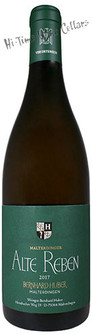


JAMES SUCKLING - 97 POINTS Enormously deep, flinty nose with great candied citrus and dried herb complexity. Super-focused and precise palate, and the power and concentration are wonderfully underplayed. Incredibly long, racy and chalky finish. Wild-fermented and matured on the lees in small oak cooperage. Unfiltered. Drink or hold.
DECANTER MAGAZINE - 95 POINTS It is essentially the second wine behind the Schlossberg, which is more hedonistic and complete. Here, the reduction is more pronounced, expressing itself through wet stone, incense and flint. The citrus fruit takes on a candied character. Overall, everything is stricter and more austere, with the acidity still quite brash. The toasty notes from ageing in small oak barrels (about 30% new) and the butteriness developed during two years on the fine lees still need time to come to terms with themselves.
JANCIS ROBINSON - 17.5 (Out of 20) POINTS A wild, fumy greeting – way more flint than fruit. Then, delicate notes of lemon verbena and grapefruit pith emerge from the stony silence. A wine of unbridled tension, currently impenetrable, a block of unhewn marble. This is not the familiar, juicy Baden; it is an exercise in modern Scandinavian design, a compelling expression of powerful, austere purity. (PS)
WINE ADVOCATE - 95 POINTS The sulfur-yellow 2023 Bienenberg Malterdingen Chardonnay GG offers a still pretty reductive (sulfury) yet deep and elegant bouquet of crushed rocks and lemon rind aromas intertwined with saline and vegetal or leafy nuances. Elegant, precise and provided with a concentrated fruit core, this is a medium- to full-bodied, fresh and savory Chardonnay with fine, young tannins and a drying sulfur influence. Tasted in July 2025.
After the hot and dry 2022 vintage, with its thick-skinned, tannin-rich berries and compact wines, 2023 is a concentrated yet balanced, elegant and early-drinking vintage that will probably be enjoyed sooner than 2022. However, the vintage was quite tricky, but Julian Huber managed it excellently and is going to release a superb range of grands crus (GG) in September.
2023 was a warm year with sufficient rainfall. The vines were “super juicy” and “grew beautifully,” says Julian Huber at the start of the tasting of the new vintage. “The grapes hung very well, and flowering took just three days.” As a result, there were no seedless berries but larger and more compact grapes.
It was therefore necessary to intervene to regulate growth, as the vines were growing too much and producing too many grapes. Instead of the usual 40 kilograms, two years ago, the vines were bearing a whopping 60 to 70 kilograms, because there was always water available and the temperatures were pleasantly warm. These circumstances required extensive canopy management during the growing season, whereby the grapes had to be kept in the shade while ensuring sufficient air circulation in the middle of the foliage wall.
The compact structure of the grapes themselves also had to be changed after the clusters had closed and before veraison, for example by cutting away the shoulders. Julian Huber speaks of a reduction of two-thirds of the original grapes. Depending on the genetics, this is extremely labor-intensive work. Some grapes even had to be halved so that the berries did not press against each other. “These interventions were necessary, otherwise we would have had botrytis problems immediately,” says Huber, referring to his Pinot varieties and Chardonnay. At the end of August, when the grapes were already large and compact, there was a lot of rain and many berries burst where the grapes had not been relieved or loosened beforehand. “In some cases, we even had to use hairpins to remove the botrytis berries,” says Huber, who threw his hands up in despair several times during the first 10 days. “But then things got better.”
The nutrient supply to the grapes was “superb” thanks to the water in 2023. According to Huber, they had to wait a long time until harvest. “The classic 100 days from flowering to harvest were not enough to achieve the desired aromatic ripeness. Perhaps the abundance of water was to blame,” says Huber. However, during the longer hanging time on the vine, the sugar increase in the berries remained moderate. Huber's 2023 Pinot Noirs all have an alcohol content of around 12.5% alcohol. “What ended up in the press was the most beautiful selection,” says Huber. “The longer we waited, the better the grapes tasted because they were concentrated by the air and sun.”
Nevertheless, some plots were only half harvested or processed. There are at least three selections before the berries end up in the cuve: the first is done by eye and by hand in the vineyard, the second on a vibration table in the cellar, and the third is carried out using automatic optical sorting. This was particularly important in late summer 2023, as Huber had noticed that the grapes unusually had two layers. “The inner berries had not received enough light and were light red on one side but dark on the other. Our sorting system allowed us to remove these berries.”
Following the powerful and highly impressive but lower than usual sulfured Pinot Noir of the 2022 vintage, Julian Huber succeeded in producing brilliant, clear, elegant, concentrated and exciting Pinots the following year, which were quite aromatic on the nose, silky, fresh and tightly structured yet refined on the palate due to crunchy tannins. The lingering finish is saline and makes you salivate.
The whites, namely Chardonnays, are full-bodied, very elegant and remarkably refined as well as mineral on the palate, provided with very complex, vital, lemon-infused and nervously calcareous flavors as well as mouth-tickling grip and delicate tension. These 2023s might not be dramatic yet they are playful, which is an art in itself in this warm but dangerously generous vintage.
Aug 28, 2025
DECANTER MAGAZINE - 95 POINTS It is essentially the second wine behind the Schlossberg, which is more hedonistic and complete. Here, the reduction is more pronounced, expressing itself through wet stone, incense and flint. The citrus fruit takes on a candied character. Overall, everything is stricter and more austere, with the acidity still quite brash. The toasty notes from ageing in small oak barrels (about 30% new) and the butteriness developed during two years on the fine lees still need time to come to terms with themselves.
JANCIS ROBINSON - 17.5 (Out of 20) POINTS A wild, fumy greeting – way more flint than fruit. Then, delicate notes of lemon verbena and grapefruit pith emerge from the stony silence. A wine of unbridled tension, currently impenetrable, a block of unhewn marble. This is not the familiar, juicy Baden; it is an exercise in modern Scandinavian design, a compelling expression of powerful, austere purity. (PS)
WINE ADVOCATE - 95 POINTS The sulfur-yellow 2023 Bienenberg Malterdingen Chardonnay GG offers a still pretty reductive (sulfury) yet deep and elegant bouquet of crushed rocks and lemon rind aromas intertwined with saline and vegetal or leafy nuances. Elegant, precise and provided with a concentrated fruit core, this is a medium- to full-bodied, fresh and savory Chardonnay with fine, young tannins and a drying sulfur influence. Tasted in July 2025.
After the hot and dry 2022 vintage, with its thick-skinned, tannin-rich berries and compact wines, 2023 is a concentrated yet balanced, elegant and early-drinking vintage that will probably be enjoyed sooner than 2022. However, the vintage was quite tricky, but Julian Huber managed it excellently and is going to release a superb range of grands crus (GG) in September.
2023 was a warm year with sufficient rainfall. The vines were “super juicy” and “grew beautifully,” says Julian Huber at the start of the tasting of the new vintage. “The grapes hung very well, and flowering took just three days.” As a result, there were no seedless berries but larger and more compact grapes.
It was therefore necessary to intervene to regulate growth, as the vines were growing too much and producing too many grapes. Instead of the usual 40 kilograms, two years ago, the vines were bearing a whopping 60 to 70 kilograms, because there was always water available and the temperatures were pleasantly warm. These circumstances required extensive canopy management during the growing season, whereby the grapes had to be kept in the shade while ensuring sufficient air circulation in the middle of the foliage wall.
The compact structure of the grapes themselves also had to be changed after the clusters had closed and before veraison, for example by cutting away the shoulders. Julian Huber speaks of a reduction of two-thirds of the original grapes. Depending on the genetics, this is extremely labor-intensive work. Some grapes even had to be halved so that the berries did not press against each other. “These interventions were necessary, otherwise we would have had botrytis problems immediately,” says Huber, referring to his Pinot varieties and Chardonnay. At the end of August, when the grapes were already large and compact, there was a lot of rain and many berries burst where the grapes had not been relieved or loosened beforehand. “In some cases, we even had to use hairpins to remove the botrytis berries,” says Huber, who threw his hands up in despair several times during the first 10 days. “But then things got better.”
The nutrient supply to the grapes was “superb” thanks to the water in 2023. According to Huber, they had to wait a long time until harvest. “The classic 100 days from flowering to harvest were not enough to achieve the desired aromatic ripeness. Perhaps the abundance of water was to blame,” says Huber. However, during the longer hanging time on the vine, the sugar increase in the berries remained moderate. Huber's 2023 Pinot Noirs all have an alcohol content of around 12.5% alcohol. “What ended up in the press was the most beautiful selection,” says Huber. “The longer we waited, the better the grapes tasted because they were concentrated by the air and sun.”
Nevertheless, some plots were only half harvested or processed. There are at least three selections before the berries end up in the cuve: the first is done by eye and by hand in the vineyard, the second on a vibration table in the cellar, and the third is carried out using automatic optical sorting. This was particularly important in late summer 2023, as Huber had noticed that the grapes unusually had two layers. “The inner berries had not received enough light and were light red on one side but dark on the other. Our sorting system allowed us to remove these berries.”
Following the powerful and highly impressive but lower than usual sulfured Pinot Noir of the 2022 vintage, Julian Huber succeeded in producing brilliant, clear, elegant, concentrated and exciting Pinots the following year, which were quite aromatic on the nose, silky, fresh and tightly structured yet refined on the palate due to crunchy tannins. The lingering finish is saline and makes you salivate.
The whites, namely Chardonnays, are full-bodied, very elegant and remarkably refined as well as mineral on the palate, provided with very complex, vital, lemon-infused and nervously calcareous flavors as well as mouth-tickling grip and delicate tension. These 2023s might not be dramatic yet they are playful, which is an art in itself in this warm but dangerously generous vintage.
Aug 28, 2025